Iran Oil Sanctions 2026: Why the US Is Buying Oil From Its Own Enemy
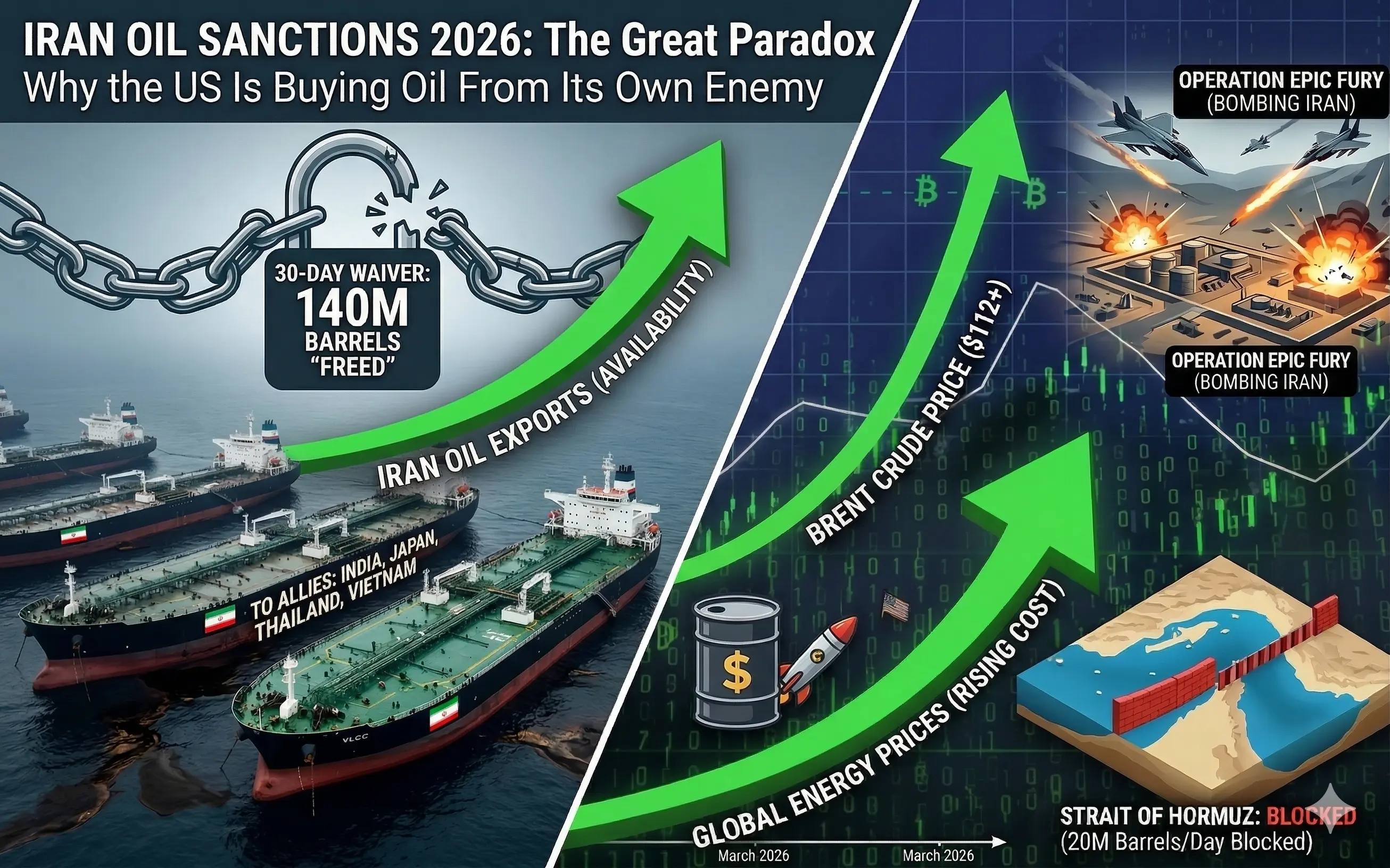
The Trump administration just lifted Iran oil sanctions in 2026, while simultaneously bombing Iran. On Friday, March 20, Treasury Secretary Scott Bessent announced a 30-day waiver allowing the purchase of 140 million barrels of Iranian crude already stranded at sea.
The move comes as the US-Israel war on Iran enters its fourth week and gas prices hit their highest levels since 2023.
What the Iran Oil Sanctions 2026 Waiver Actually Does
The Treasury Department issued a "narrowly tailored" authorization that temporarily reverses decades of US sanctions policy against Iranian oil. Here's what changed overnight:
- 140 million barrels of Iranian crude already loaded on ships are now available for global purchase, previously, only China was buying them at a discount.
- The waiver runs through April 19, 2026, a one-month window that only covers oil already at sea, not new production.
- US allies like India, Japan, Thailand, and Vietnam can now legally buy this oil instead of it going exclusively to China.
- Iranian oil can even be imported into the US under the waiver when necessary to complete a sale or delivery, per the Treasury license.
- Related services are included,insurance, crew management, docking, and previously sanctioned tanker ships are all temporarily cleared.
Treasury Secretary Bessent framed it as a strategic weapon: using Iranian barrels against Tehran to suppress global prices during Operation Epic Fury.
Why the US Lifted Iran Oil Sanctions During a War
This is where the Iran oil sanctions 2026 story gets unprecedented. The US is bombing Iran's military infrastructure while simultaneously freeing up Iran's oil revenue. The administration says it had no choice.
- Oil prices have surged roughly 60–84% since the war began on February 28. Brent crude hit $112/barrel on Friday — the highest of the conflict.
- The Strait of Hormuz is effectively closed. Only a handful of ships pass daily versus the normal 138. About 20 million barrels/day of global supply is blocked.
- The administration has already exhausted its other options. It released 172 million barrels from the Strategic Petroleum Reserve, lifted Russian oil sanctions, waived the Jones Act, and eased domestic shipping rules.
- Gas prices are now up more than $1/gallon since the war started. The national average hit $3.92 on March 22, the highest since October 2023.
- United Airlines CEO Scott Kirby told employees the company is preparing for oil at $175/barrel and doesn`'t expect a return below $100 until the end of 2027.
White House officials now privately admit that higher energy prices could linger for months, especially as fighting intensifies and the Strait of Hormuz remains blocked.
The Political Firestorm Over Iran Oil Sanctions 2026
The decision to ease Iran oil sanctions in 2026 has drawn bipartisan fury — and open mockery from Trump's own former allies.
- Sen. Richard Blumenthal (D-CT) called it "sickeningly, shamefully stupid — lifting sanctions on oil sales by Russia and Iran, fueling their war machines with windfall cash."
- Sen. Jeanne Shaheen (D-NH) said Trump is "giving the Iranian regime a financial lifeline while American families pay the price."
- Former CIA Director John Brennan said the administration is "allowing Iran to benefit financially" from the very war the US started.
- Former Trump Communications Director Anthony Scaramucci mocked it on X: "We attack Iranian oil facilities to hurt the regime, then we unsanction Iranian oil so they sell it to our allies, so we can continue to bomb the regime."
- Republican criticism has been muted so far, though some GOP foreign policy hawks have privately expressed concern about reversing the "maximum pressure" doctrine Trump championed since his first term.
The core contradiction: the US spent a decade sanctioning Iranian oil under both Republican and Democratic administrations. Now it's lifting those Iran oil sanctions in 2026 to pay for the consequences of its own military campaign.
How Iran Oil Sanctions 2026 Affect Gas Prices and Your Wallet
The 140 million barrels sound like a lot — but in context, it's roughly 10–14 days of additional global supply. Here's what it means for American consumers:
- Short-term relief is limited. Bessent himself said the freed barrels would help for "10 to 14 days." After that, the supply gap returns unless the Strait of Hormuz reopens.
- Brent crude ROSE to $112 the day of the announcement. Markets are signaling that this waiver isn't enough to offset the 20 million barrels/day blocked by the Strait.
- Gas prices are still climbing. The national average jumped from $3.53 to $3.92 in one week. California is at $5.62. Expect further increases through April.
- Grocery and food prices will follow. Diesel-powered transportation costs get passed to shelves within 2–4 weeks. Mid-April could bring noticeable increases.
- The Federal Reserve's rate-cut path is now blocked. Higher oil prices feed inflation, which prevents the Fed from lowering interest rates — keeping mortgages, car loans, and credit card rates elevated.
- Goldman Sachs warns elevated prices could persist through 2027 in a worst-case scenario where the Strait remains disrupted.
What Happens Next: Key Dates to Watch
The Iran oil sanctions 2026 story is far from over. Here are the critical milestones ahead:
- March 22–24: Trump's 48-hour ultimatum to Iran to reopen the Strait of Hormuz expires. Escalation or de-escalation will move markets sharply.
- April 19: The Treasury's 30-day sanctions waiver expires. If not renewed, the 140 million barrels of freed supply disappears from the market.
- April 11: The parallel Russian oil sanctions waiver also expires
- Late April: Q1 earnings season begins, expect major companies to cite Iran war energy costs as a drag on profits.
- May 2026: Fed Chair Jerome Powell's term ends. The new chair inherits an inflation problem driven partly by this oil crisis.
- November 2026: Midterm elections. Gas prices are the #1 pocketbook issue, and the administration knows it.